Since the end of the 19th century, we find flip books distributed as advertising gifts or sold as books or toys. Black and white or colour pictures or drawings of all kinds illustrates them. We classified them in main sections: Cinema, Sport, Eroticism, Advertising, News, Comics-Cartoon and Animation, Artists’ Flip Books, Books, Cut out leaves or stickers’ plate, Internet and at last a few Unclassifiable. For each category, we chose relevant examples from our collection.
Cinema and its history brought to the flip books several famous scenes. Around 1897, A.H. Gies produced short silent screen movies, like Edison and Gaumont also did. Extracts from more or less famous movies regularly helped to point up the actor (more than the movie itself). Images do not automatically give priority to the continuity of the scene, but more to pictures removed from the film at regular intervals.
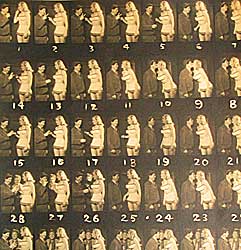
A single sequence like the one showing Marilyn Monroe and the Marx Brothers in her first movie ” Love Happy” can be enough to make a flip book. The flip book devoted to Marilyn in the series called “Flip-O-Vision” — given in prime by Topps Production — used these pictures. It is presented in cut out and put together stripes and shows scenes of the movie. Another series called ” Ideal Moving Pictures” shows each a movie scene with an actor or an ideal situation to flip over. A bit later, a series of 12 flip books called ” Moviebook” shows in one of their movies actors of the Metro-Goldwin-Mayer such as Clark Gable, Joan Crawford or Greta Garbo with under each picture, elements of their biography. In 1963, Topps realized 36 flip books marketed per two under the name of ” Monsters ” because they often represented fantastic characters of Universal Pictures movies such as Frankenstein and Wolfman.

In order to realize these flip books, it was necessary to get the agreement of the producer and eventually the highlighted actor. So is the contract signed by both Warner Bros and Kellogg for the production of a flip book with Burt Lancaster in 1950. On page 2, Burt Lancaster himself gives his agreement.
In 1969 in New York, graphic designers Sandy and Val directed a series of flip books called Pocket-Cinema some using scenes of old movies. In France, a series entitled Pocket Film shows actors such as Michel Simon or Edwige Feuillère in one of their movies. In 1998, the Éditions Cent Pages directed a series of flip books showing scenes of Fric-Frac with Arletty and Michel Simon. For the centenary of Luis Bunuel’s birthday, the Filmoteca Ayuntamiento of Zaragoza devoted a flip book to his famous movie Un Chien andalou. For many years, the Deutsches Filmmuseum of Frankfurt had been realizing several flip books, among them in 2003 one devoted to Winnetou, the German western series.
Flip books have always been made to promote films. The Paramount directed in 1926 Aloma of the South Seas a flip book with Gilda Gray dancing on the beach. Another scene shows Clara Bow nicknamed “The IT Girl”, to promote the film IT directed in 1927. More recently, we have flip books for the promotion of movies such as Fargo, Terminator, Matrix, Star Wars or Spider-Man.
The Montreal film archives realized a series of thirteen flip books — that are animated cartoons — at the occasion of the world festival of animation in 1967, directed by major names of the image such as Peter Foldes or Robert Breer. The Royal Film Archive of Belgium proposed for its 50th anniversary in 1988 a flip book directed by the painter Alechinsky.
To celebrate the 100th anniversary of cinema in 1995, the company DD published four cases containing three flip books each as a tribute to the founders of cinematograph: Émile Cohl, Léonce Perret, Ferdinand Zecca, Jean Durand and Étienne-Jules Marey. The Institut Lumière in Lyon also published historical flip books taken from the first Lumière brothers’ films: “L’Arroseur arrosé”, “L’arrivée d’un train en gare de La Ciotat” and “La sortie des usines Lumière”. The Museum of the Moving Image in London also realized for the event a box of four flip books showing extracts of four of the first movies ever directed in Great Britain, Germany, the United States and France. Inside the box there is a small explanation book about the four films and a short history of the flip book called “The Flick Book Story”, remarkable because it is one of the only texts on the subject 1. Finally, the British Council, during the exhibition “The Birth of the Movies”, published a presentation box of five flip books showing five scenes of the motion picture’s early years.
We do not forget TV series: a flip book on both sides directed by the publisher Simon & Schuster shows the Dancing Baby (See animation), famous character of the series Ally McBeal.
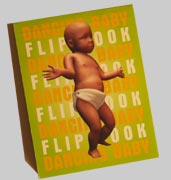
The artist and American specialist of animation film, Jean-Pierre Trépanier, a long time made of the flip book his main way of expressing himself, he even said: “A flip book can tell a story. And it is cheaper than a movie 2 “.
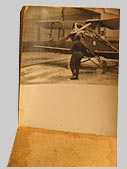
Sport has been one of the main users of flip books, especially in the United States and Great Britain. The flip book can be either a tribute to a sportsman or the celebration of an event. At the end of the 19th century, flip books were mainly illustrated by drawings, and then came the photographs. For example, a flip book celebrating the speed record on a mile by the horse Dan Patch in Minneapolis in 1906 was realized a few years later and re-published then. In 1921, an unknown illustrator immortalized the historical boxing match between Jack Dempsey and Georges Carpentier. On the other hand, original photographs illustrate this rare flip book showing the English aviator Amy Johnson (See animation) probably in the 1930s when she won many records before her deadly last flight in 1941.
In 1937, the Goudey Gum Company offered 13 flip books named ” Baseball Movies ” about the main baseball champions. Presented in two parts, they called them afterwards ” Thum-Movies “.

A British company called Flicker Productions directed a series of about 35 flip books about different sports — probably made before World War II — published according to sports by publishers such as Slazengers Ltd for tennis and Burroughes & Watts Ltd for Snooker. The first ones are devoted to cricket then tennis, golf, football, hockey, swimming, snooker, etc. Cricket or golf fans collect flip books about champions such as Don Bradman or Bobby Jones; they are consequently more difficult to find.
American people are very fond of the gifts they call Premiums, gifts offered with purchases, more particularly foodstuffs.
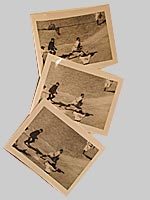
Sam and Gordon Gold supplied between 1920 and 1974 brands for Premiums particularly devoted to sports. They ordered original pictures for a flip book about baseball, but never published it.
At the beginning of the 1960s, the Canadian cereal brand Post offered a series of ” Hockey Stars flip books ” with texts in English and French as a tribute to championship stars of the time.
Not dated, this case of eight Swiss flip books ” Ski pocket film instructor ” shows two Swiss champions teaching skiing techniques.
At the beginning of the 1970s, the Daily Mirror realized a series of commemorative flip books about world football stars.
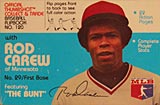
More recently, in 1977, the main NBA players — the American basketball championship — were the actors of a series of flip books (Dell Thumbshots Basketball); each flip book also contained on the back of each page biographical information and statistics about the player. The MLB (Major League Baseball Players) should have directed a series of the same type at the same time, but it never went past the prototype with a flip book devoted to Rod Carew. In 1989, a series called Flipp Tipps showed baseball players: Mickey Mantle, Brett Butler, Don Mattingly, etc. and the famous football player Pelé.
Most famous sportsmen get, one day or another, their flip book, among them Michael Jordan or Tiger Woods. Sometimes brands such as Coca Cola or sponsors realize flip books. In 2001, the 40th anniversary of the famous Roger Maris‘s Home Run was the occasion of a commemorative flip book.
Between 2002 and 2004, the company Flipp Sports produced (with the help of the American professional baseball associations) a series of flip books about the great events of the American championship; they focused on the main players and multiplied the information.

Sport training also uses the flip book. The movements’ breakdown speaks indeed for itself. A famous series of 1939 entitled Ciné-Sports Library shows many sports, from javelin to golf, thanks to a series of flip books in a format between books and the traditional flip book allowing several animations. In 1957, the company Gillette devoted a double flip book to secret gestures made by baseball players to exchange information. In 1978, a series Sport Flip showed the different athletics sports. Flip books represent fighting sports especially well, notably with demonstrations of Bruce Lee. Flip books can deal with all kinds of sports, even the most unexpected: trampoline or stick throwing.

Eroticism was a great source of inspiration for flip books’ publishers. In the 1900s, employees of specialized shops of the Rue de la Lune in Paris sold erotic flip books — more “naughty” than pornographic. Germany too was not the last with its Lebende Photographien. The United States produced photo series of a nude stripper (see animation). More recently in 1988 in Berlin, a company realized four “Erotic Mini Movie” and the German company Harlekin also published some
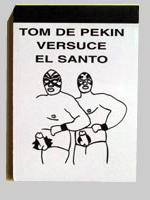
in the 1990s. At the beginning of the 21st century, the American publisher PowerHouse produced the Strip Flips of Leslie Lyons. Cartoonists are not outdone, like the German flip books published in 1976 by Comics Production. And in 2003 the flip book of Tom de Pekin (See animation) published by the Papier Gras gallery in Geneva.
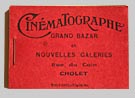
Right after its invention, the flip book served as an advertising object. Relatively easy to make, it can be either a gift or a promotion tool for a brand, or even give the opportunity to show a product in action or the way to use it. Like any other advertising objects — blotting papers or bookmarks for instance — even if they are often printed in larger quantities than those designed to be sold, they are sometimes more difficult to find, especially in a good state.
Like the Bon Marché that produced about twenty flip books under the name of Cinématographe de poche, other stores promoted themselves with this method, such as the Grand Bazar et Nouvelles Galeries in Cholet.

Just before World War I, the Ligget & Myers Tobacco Company realized a series of ten flip books about dancers in action. They promoted the Sultan and Fatima cigarette brands. Some were also realized outside the series and used the other way (See animation). In the same way, the brand Turkish Trophies, produced by Sotirios Anargyros from 1890 and taken over in 1900 by the American Tobacco Company of James Duke, realized about twenty flip books in 1905 showing movie scenes of the time.
Showing its product is also a way to sell it. For instance, this print machine manufacturer in Chicago who shows how his machine works.
In England, a shoe sole manufacturer explains how to replace the soles in less than one minute; a laboratory shows the astonishing effect of its potion Bovril (see animation) in one of the oldest fully coloured flip books.
Some brands used sportive achievements to promote their products. The Castrol Oil in two flip books dated 1937 showed the feats of Sir Malcolm Campbell and captain George Eyston winning the world’s water speed record.
After the war in France, a wool manufacturer chose animated cartoons under the name of Pingouinscope, Stemmscope and Adhemarscope.
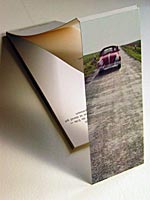
Since then, many kinds of brands are making commercial flip books. Car manufacturers are surely the most active; a car in motion is perfect for a demonstration. Volkswagen makes some regularly; the one of 1965 showing the Beetle is particularly original, but Volkswagen also realized a flip book to explain how its airbags work. Chevrolet presented the space of its ” 1969 Walk-in-Wagon “. Peugeot the working of the sunroof of its Peugeot 200 et 402 and made one for the 206 too. Mitsubishi showed in the same way the sunroof of its Spyder, Mercedes the one of the 300 CE-24 Cabriolet and Honda the manual opening of the CRX. Toyota showed how the seats fold in the Yaris Verso. Lancia did the same for the Lybra and a whole series with an original binding for its Ypsilon (See animation). Porsche showed the Boxster, Alfa Romeo its 156 model and Audi its A4. Audi also celebrated its victory in the 24 Heures du Mans with a flip book to see 24 hours in 2.4 seconds. The new Mini also got its original flip book as it mixes cartoons and photographs. We do not forget motorbikes with BMW, but also a box of six flip books for Harley Davidson.
Any product can be the occasion of a flip book, like this oven that opens to celebrate the 125th anniversary of the brand Neff or the illustrations going with the cheese grater box designed by Philippe Starck under the name ” Mister Meumeu “.
Fashion or beauty products’ manufacturers made some too, like Nike, Adidas or Burberry, in the tradition of the pre-war Presto! Chanel too, and the beauty products line Mac Femme Noir as well as perfumes like So You by Giorgio Beverly Hills or Fragile (See animation) by Jean-Paul Gaultier who stuck at the back of his sophisticated flip book a pull-up disc to smell the fragrance.
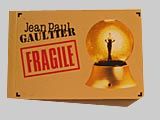
Alcohol too, such as Absolut Vodka which explains how to prepare a Cosmopolitan cocktail, or Glenfiddich which features Charlie Chaplin. More unusual, a tinned sliced pineapple producer shows a stripper in action.
NEWS
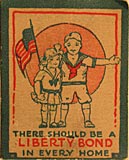
News and politics can take over the flip book. In 1917, the United States made one to promote the ” Liberty Bond “. Inside, they presented the American flag with a few pages about its history. In 1925, for the Holy Year, we see Pope Pie XI blessing the crowd. In 1929, bullfights in Seville and Barcelona are celebrated.
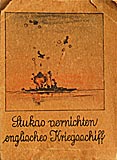
In Germany, at the turn of the 19th century, we could see Kaiser Wilhelm II taking off his helmet on a stand. Probably realized in the 1930s, a flip book called ” Der Führer spricht ” shows Hitler talking in a microphone. Also serving the propaganda during World War II, the flip book ” Stukas vernichten englishes Kriegsschiff ” (Stukas destroying English war boats) expressed clearly its intentions in very simple drawings.
At the same period, another flip book devoted to General Franco shows him raising his arm to greet! Finally, King George VI waves at the crowd, probably during World War II in front of a war boat.
COMIC STRIPS, CARTOONS AND ANIMATION

The form itself of comic books does not allow transforming them easily into flip books. However, we found a series of four about Marsupilami published in Berlin in 1988. In 1989 and 1990, Semmel Verlag devoted a series of nine flip books to the strip cartoonist Brösel and his character Werner; the first four with black covers were then released with coloured covers. Rackham Productions in Paris produced and published a series of eight between 1989 and 1992. It starts with two flip books of Winsor Mac Cay, one of the first American Comic Strip authors — but these are just cartoon extracts. Strip cartoonists were in charge of the others: Riff Reb’s, Moebius (See animation), Pitrak (See animation), Got, Leconte et Pic. Another flip book of Moebius (See animation) without date or title is even rarer. In 1995, Démons & Merveilles devoted four to Spirou et Fantasio. In 2001, Carlsen Comicks devoted three to Haggi and his Hartmut.
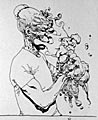
In Germany, publishers devoted several series to Loriot and Mordillo (including postcards containing a flip book). Then since 2001, the Éditions flblb in Poitiers has been realizing flip books with contemporary comic book creators.
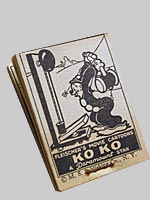
The cartoon is more favourable for the use of flip books because entire scenes can be isolated, as we saw for cinema. Flip books’ publishers always used Max Fleischer’s cartoons. Betty Boop and Koko the clown, then Popeye and Gulliver’s Travels were taken over at different times. They also rapidly used characters such as Felix the Cat by Otto Messmer, or the Flintstones and The Huckleberry Hound by William Hanna and Joseph Barbera. This back-up material affected the other cartoon publishers, notably Tex Avery with a Démons & Merveilles series in 1994.
Walt Disney published some since the beginning of his career; he sometimes gave his authorization to use his characters for commercials, but also as by-products sold in his theme parks and to promote his films. Still today, the Walt Disney Company publishes flip books showing extracts of their latest movies. One of the most famous was published in 1939 by Collins and devoted to Donald & Pluto. It is a large booklet holding five flip books in juxtaposition printed on both sides — meaning 2000 pictures. Hachette published it in French through Hachette. There is another English edition with ten flip books.
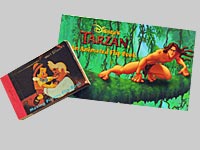
Disney published four major series: one for the Disneyland resorts with the Disney characters; a second one with almost exclusively cartoon scenes of Walt Disney himself published in the 1970s — some often re-published, among them one in French by Bernard Carant ; a third one devoted to the great Walt Disney cartoons published by Renner Davis in 1993 and 1994; and the last one always in progress each time a new cartoon is released. When Disney does not publish by itself, linked brands do it, such as Hyperion, Mouse Works or Merrimack or Disney may also grant rights to other publishers.
A series of Walter Lantz’s cartoons served as gifts in cereals’ boxes in 1949 under the name Post Grape Nut Flakes. They are all on both sides, but only one side in colour — which was rare for a time when TV was still in black and white and one could only see Tom & Jerry in colour in magazines.
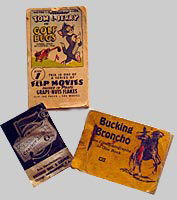
Premiums of that kind are generally small, printed in large numbers and rather brief. The most famous are those found since 1912 in the Cracker Jack packets, the American popcorn founded in 1893. The oldest we found shows an extract of a Charlie Chaplin film. Drawings illustrated them more often than pictures and they were printed in Japan to save production costs. We found different sizes and more particularly head-to-tail for some series. As well as Cracker Jack, companies such as Kellogg’s, Kinder, Storck (Bazooka) (See animation) Post, etc. realized flip books.
In the same way and without links to cartoons or comics, since the origins, drawings have been illustrating many flip books and it is still today an important part of the production. From very refined drawings to sophisticated researches, illustrators find in flip books an art form allowing them to express their creativity.
After rather coarse flip books at the end of the 19th century, they became closer to what we see today in the first part of the 20th century. Especially series realized by the American toy manufacturers Midgette and Peco, that can be used either in their viewers or as simple flip books.
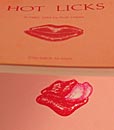
Regularly, artists exercise this form. They find publishers — sometimes avant-garde — or publish themselves, and they all tell their own stories. The most productive in the United States in the 1980s were Patrick Jenkins, who also wrote a manual to show children how to make their own flip books, and Ruth Hayes (See animation) with very neo-surrealist works, Matt Pollard and Joe Sharpnack in the 1990s and Massimo Indrio in Italy, still published by the Giunti group, with some flip books also re-published in Canada.
In France, two illustrators are producing their own flip books since the end of the 1990s: Benoît Jacques and Jean-Vincent Sénac.
The definition of the artist’s book is wide: a book made by an artist showing his own creation. We include in this category flip books that celebrate artists (Gilbert & George), flip books that show inventiveness in form (for instance George Griffin and Christophe Boutin) and those directly realized by artists, illustrators or photographers in limited editions.
The first known artist’s flip book is the one Robert Breer realized under the title Image par images for the exhibition “Le Mouvement” at the Galerie Denise René in 1955.
In 1970, during the Vietnam War, Georges Tscherny drew a hand turning into the peace symbol.
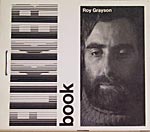
In 1972, the British company Alecto International Limited produced under the name Flikker Book a series of nine flip books realized by artists, among them Roy Grayson, Patrick Procktor, Eduardo Paolozzi and François Dallegret.
The same year, a catalogue of John Baldessari is an example of an artist’s book not necessarily conceived as a flip book, but which creates an animation when leafed through. John Baldessari made another flip book in 1998, Zorro.
In 1976, Conrad Gleber produced a flip book, Raising a family (See animation), in which the photo of a family gradually appears. It is often cited as a perfect example.
In the 1970s and 1980s, George Griffin realized flip books from drawings (such as L’Age Door and Face Phases) but also combining drawings and photomontage (such as Urban Renewal).

In 1980, Sol Lewitt published a photo book showing a cockfight under the title Cock Fight Dance. You simply flip through to see the cocks rushing at each other.
There are three different titles of Gilbert & George, the first two of which have been re-published. For each of them there is a numbered and signed version which is obviously the most sought after. The first one, ” Oh, the Grand old Duke of York ” (See animation), before being re-published in flip book format, served as the catalogue for an exhibition in Luzern, Switzerland in 1972.
Other artists represented themselves during performances, such as Saburo Murakami in Entrance, Sound.
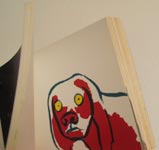
In 1988, the Blue Monday label invited Robert Breer for a video performance. A flip book of Robert Breer’s drawings was then realized in an edition of 350 copies and offered by the label at the end of the year.
In 1993, the gallery Camille Von Scholz realized what they called four “bibliofilms” packed in an old film box. Entitled ” Les Visions d’Oskar Serti “, these flip books, hand-painted by Patrick Corillon, are made from short films shot by the writer who, suffering from visual impairment, could only perceive colours through the pain caused by special nailed shoes. This box is limited to only 35 copies.
Since the 1990s, more and more artists have used this medium as a means of expression. They often realized them alone. So did Matthew Gilson, who realized several flip books from his photographs of Chicago. Anina Schenker and Stephanie Ognar portray themselves in photographs. Patrick Kelley adapts everyday events. Lee D. Böhm and Juliane Otterbach use illustration and Akiko Hada or Hugh Connelly montage. Erick de Lyon realized a box of seven flip books devoted to photographs of bats.
The German photographer Volker Gerling, who nicknamed himself the Daumenkinograph, has been realizing since 1998 flip books showing everyday life scenes or faces, which he has already exhibited, mainly in Berlin.
The Austrian artist Judith P. Fischer (See animation) also uses the flip book to show her works that are equally video performance and photography.

The American Julia Featheringill (See animation) creates from photographs very exceptional animations of everyday life and uses all the resources of the flip book.
The French illustrator Paul Cox also realized himself several very successful flip books.
The French photographer, video director and writer Alain Fleischer has been realizing photographic flip books for a long time. He displayed some of them during an exhibition at the Centre d’art d’Ivry (le Crédac) in 1998. One of them was published: Le voyage d’une main.
In 2002, issue n°39 of the Visionaire magazine — each issue being different and always a collector’s object — was a wooden box containing 16 photographic flip books. Each was entrusted to a different artist, among them Spike Jonze, Pedro Almodovar, Karl Lagerfeld and Mario Testino.
In 2003, a box of 18 flip books, Italia, was produced under the name Flip-O-Rama by de.MO-Design. These are photographs by Elliott Erwitt showing Italian people.
Other artists such as Pierre Bismuth, Jean-Charles Blais, Christophe Boutin, Kyle Bravo, François Curlet, Keith Haring, Vincent Julliard, William Kentridge, Jonathan Monk, Bruce Naumann, Tony Oursler or Emmett Williams, have contributed significantly to this unknown genre with a great diversity of works.
Many books have a part to flip through in order to show an animation. It can be drawings or photographs placed in the margin of the pages. There are sometimes several in the same book.
The oldest known is in the November 1898 issue of the Harmsworth Magazine (Vol. 1, n°5). It is a series of 71 photographs of a Lumière brothers film showing two dancing children to explain the principle of cinema to those who had not yet seen it 3.
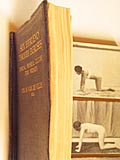
Some books, rarer, even present these illustrations as actual flip books bound into the volume. This is the case in the book by Doctor Theodoor Hendrik van de Velde, Sex efficiency through exercises published in London in 1933, in which he illustrates the exercises a woman should do to train her body.
Sports books are also well suited to demonstrations. A series published in London by Blackie & Son and entitled ” Blackie’s Sports Series ” devoted volumes to many sports such as boxing or golf. This volume by golf champion Pam Barton contains four flip books: Drive, Mashie-niblick, Spoon and Bunker Shot.
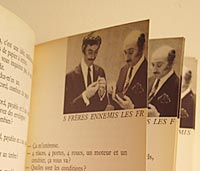
More recently, in 1968, Jean-Jacques Pauvert published a book about the humorists Les Frères Ennemis which contains texts of their sketches and a flip book announced on the cover: ” Hold the corner of the book between thumb and forefinger, keep it tight, flip through and you will see Les Frères Ennemis live “.
In 1972, a book devoted to Fred Astaire and Ginger Rogers contains two extracts from two films in which they both danced: Swing Time and Follow the Fleet.
Some comic strips such as Pif Poche , Placid et Muzo Poche and Arthur Poche 4 contain a flip book in the margin like the American ” Better Little Book ” which included a flip book in one of its series in the early 1940s.
There are also books designed to explain to children how to make optical toys, including flip books. Patrick Jenkins even devoted one almost entirely to the art of making flip books: Flip Book Animation in 1991.
CUT OUT LEAVES OR STICKERS’ PLATE
Flip books in cut out leaves or stickers’ plate are most of the time commercial items that brands insert in products. Smarties, McDonald’s, Lu, Kinder or Kellogg’s made some in the 1990s.

Others were published for children to assemble, like these boxes devoted to Popeye and Huckleberry Hound in 1961, each containing four flip books to cut out and put together.
Same thing a bit later for these two series of flip books published by Thumbflix, showing Mickey and Donald.

We also find cartoons reproduced in the margin of pages or cut out leaves inserted in periodicals for children, such as the magazine Child life in the 1930s, in an issue of Tintin in 1965, Le Journal de Mickey several times in 1991, Youpi in June 1995 or Toupie in 2000.
There is even a stamps’ plate published by the Maldives to commemorate the 100th anniversary of cinema in 1995, whose cut out stamps make a (short) flip book.
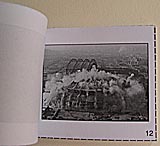
Since the arrival of the internet, it is possible to find on some websites pictures that, once printed and put together, make a flip book.
One of the most famous is surely The News Tribune’s Kingdome to Kingdoom! Flip Book . Placed on the News Tribune website, it depicted the implosion of the Seattle Kingdome on 26th March 2000. You simply had to print it and staple the pictures together.
More educational, the flip book found on the website of the Cité des sciences et de l’industrie in Paris which, for its exhibition Opération Carbone in 2004, put online a flip book entitled “Regardez une plante (Tabebuia) pousser à toute allure”, the original of which could be flipped through at the exhibition. It is a series of photos showing the growth of this plant at different stages.
As well as that kind of news events, the intention of flip books found on the web is to offer to children the opportunity to make them. For instance, the Bat Flip Book or the Whale Flip Book are very easy to assemble.
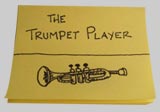
Notice them because completely different: a cartoonist, Mark Sinclair, who found this way since 1997 to show his handmade flip books on Post-it®; these are unique copies. He uses the web to animate them on his site (www.bigempire.com/postittheater).
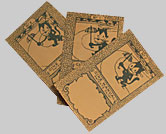
The back of playing cards has sometimes served as a flip book. When they are in the right order, you can flip through and animate a story. The oldest we found is a Spanish game with drawings of Felix the Cat.

In 1967, the Chewing Gums Topps realized a series of 16 flip books devoted to the pop group The Monkees that became popular in the 1960s thanks to a TV series. Each flip book is wrapped in what Americans call a Wrapper, an envelope that does not reveal its content. Therefore, you sometimes had to buy several to collect all 16 flip books.
Fun and playful, these flip books realized by a couple to announce their wedding and by another for the birth of their daughter.
Also remarkable, the Mémoires d’un bègue realized in flip book form by Henri Dhellemmes in 1991 in 99 copies. The only way to read it is to flip through it.
Original too, the flip book for colouring in that British Airways distributed with coloured pencils to children on their planes.
We could mention many others — just browse our database to discover them.
1: “The Flick Book Story” in Where film comes to life, Centenary of Cinema, Museum of the Moving Image, 1995.
2: Jérôme Delgado, “Un passionné du dessin d’animation au SAC. Jean-Pierre Trépanier”, website of the newspaper Forum, Université de Montréal, 11-2-98, vol.33, année universitaire 1998-1999.
3: Described in Maurice Rickards, The Encyclopedia of Ephemera, The British Library, 2000.
4: About commercial toys, see the article of Pascal Pontremoli, “Donner pour vendre: éléments pour une typologie du jeu et du jouet publicitaire”, 15e partie, Le Vieux Papier, fascicule 350, octobre 1998, which includes a section on commercial flip books (pp.158-159).